





.svg)
.svg)
.svg)
.svg)
.svg)
Sign up to upvote!
In addition to upvoting, unlock exclusive content and community benefits by joining our online forum

You don't have permission to view that page. Please upgrade your plan or log in to continue.
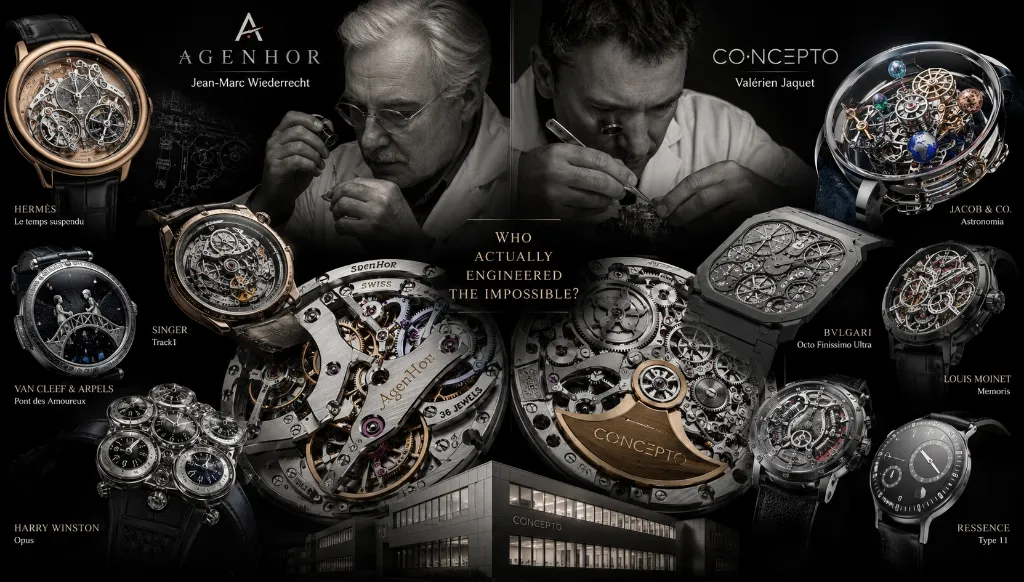
The deeper I dive into independent watchmaking, the more I realize something...
As collectors, we spend thousands of hours studying brands. We learn their histories, memorize reference numbers, debate movements, chase discontinued models, and celebrate the names printed on the dial.
But here's the question that completely changed the way I look at modern watchmaking...
Not who sold it. Not whose logo appears on the dial. Who actually made the impossible...
...possible? That question sent me down another rabbit hole. And I ended up discovering two names that almost never get discussed together.
The more I researched them...
The more I started wondering...
Have we been giving credit to the wrong people all these years?
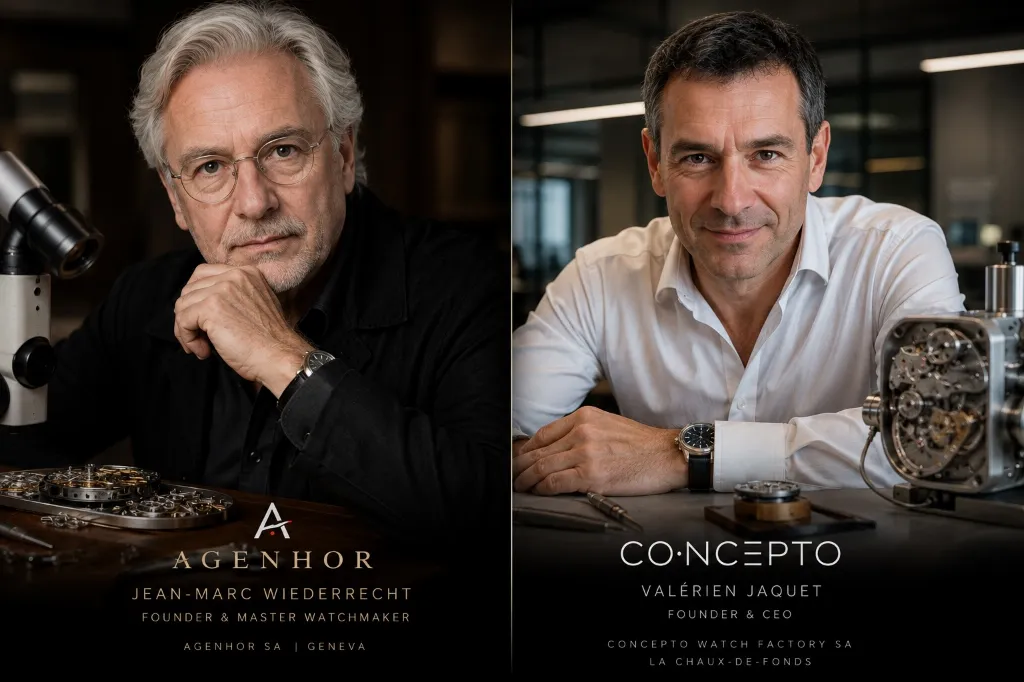
One company became legendary because collectors fell in love with one man.
The other quietly became one of the most capable movement manufacturers in Switzerland...
...yet most collectors couldn't tell you who founded it.
That fascinated me.
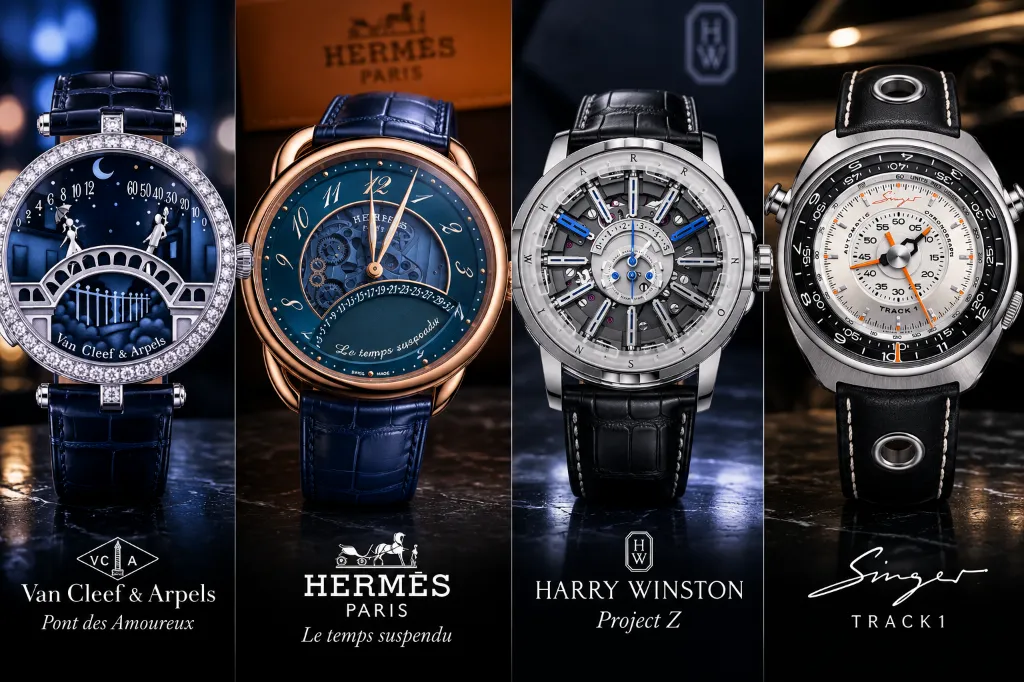
Ask almost any seasoned collector about Agenhor...
and one name immediately comes to mind.
Jean-Marc Wiederrecht.
He didn't simply create movements.
He created experiences.
Time that pauses.
Chronographs that read differently.
Displays that make you smile before you even understand how they work.
Winning the first GPHG Best Watchmaker Prize and later the Gaïa Prize cemented his reputation, but more importantly, collectors began following the man almost as much as the brands that commissioned his work.
When people talk about Agenhor...
they're usually talking about Jean-Marc Wiederrecht.
FUN FACT: One of the reasons Jean-Marc Wiederrecht is considered one of the greatest movement designers of the modern era isn't simply because he creates complicated watches, it's because he challenges the way we experience time itself.
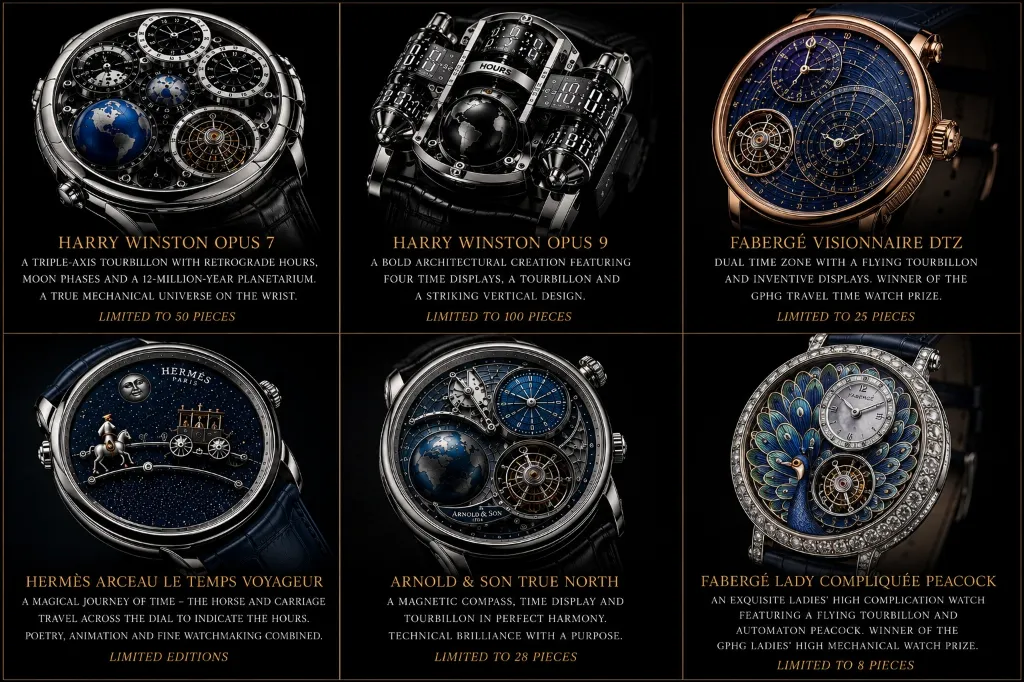
Whether through the architectural brilliance of the Harry Winston Opus 7 & Opus 9, the award-winning Fabergé Visionnaire DTZ, the whimsical journey of the Hermès Arceau Le Temps Voyageur, the technical ingenuity of the Arnold & Son True North, or the artistic elegance of the Fabergé Lady Compliquée Peacock, his work consistently blurs the line between engineering, storytelling, and mechanical art.
To me, that's what truly sets Agenhor apart. Their watches aren't designed to impress you with complexity alone, they're designed to make you stop, smile, and experience time in a completely different way
At that point, I found myself asking another question...
If Agenhor became legendary because collectors recognized Jean-Marc Wiederrecht's creativity and storytelling...
..who is playing that role today? Or perhaps an even better question...Is there another movement manufacture quietly doing extraordinary work... without receiving the same recognition?
That's when I discovered Concepto.
And honestly...
That completely changed the direction of my research.
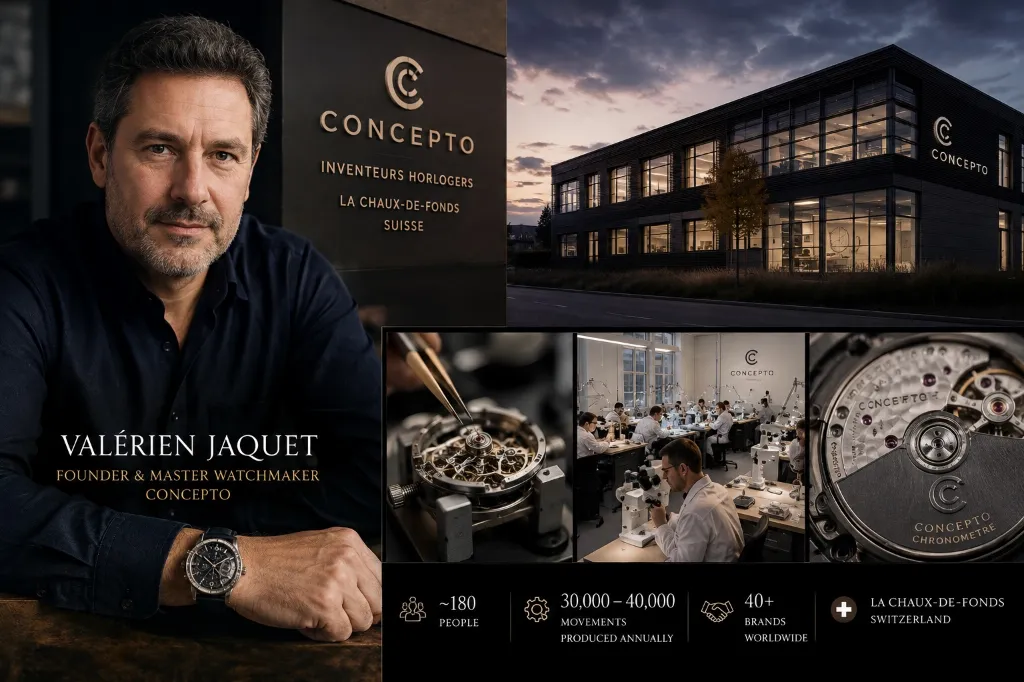
Founded in 2006 by Valérien Jaquet, Concepto didn't set out to become a famous watch brand. It set out to become something entirely different. An engineering partner.
And I think that's an important distinction. Unlike Agenhor, which built its reputation around poetic complications and emotional storytelling, Concepto quietly focused on solving some of the most difficult engineering challenges in modern watchmaking.
Not for themselves...
But for some of the biggest names in the industry. Today, Concepto operates a nearly fully integrated manufacture in La Chaux-de-Fonds, employing approximately 180 people, producing around 30,000–40,000 movements annually, and working with more than 40 different brands.
That statistic honestly caught me off guard. Because I realized...
I've probably admired dozens of Concepto-powered watches over the years... without ever knowing who was behind them.
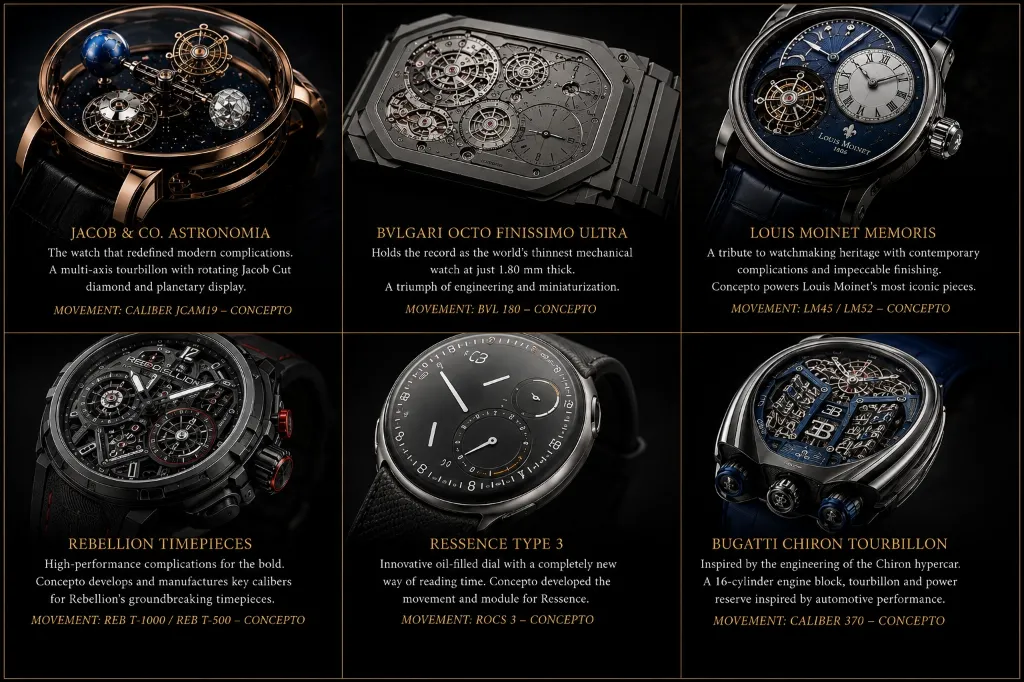
This is where things became really interesting. The more I dug into Concepto's résumé...
The more familiar the watches became. I already knew many of these pieces.
I simply didn't know who had engineered them.
That's what completely caught me off guard. For years, I admired many of these watches because of the brand on the dial. Now I found myself looking at them from an entirely different perspective. Instead of asking...
I started asking...
And that's where Concepto's fingerprints started showing up everywhere.
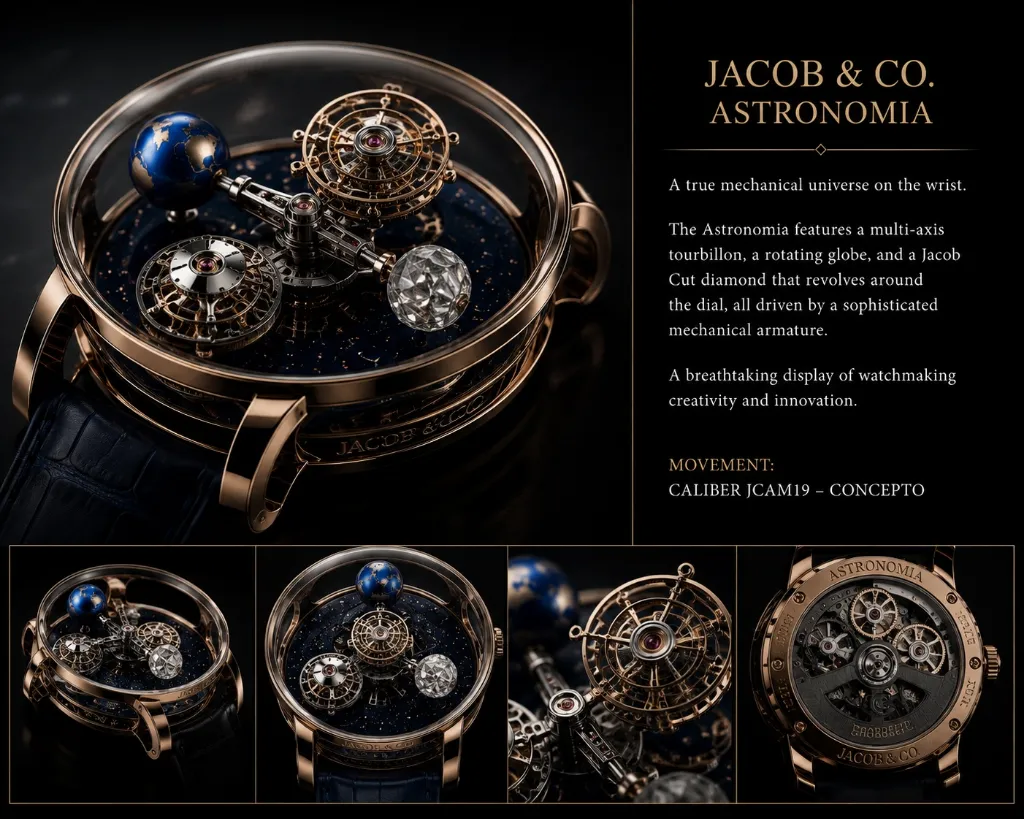
This was probably the watch that surprised me the most. It's one thing to build a tourbillon. It's another thing to build an entire mechanical universe that rotates around the dial. A constantly rotating planetary display. A multi-axis tourbillon, A rotating Jacob-cut diamond. Every time I see the Astronomia, I'm reminded that this wasn't simply about making something complicated...
It was about proving that mechanical imagination still has no limits.
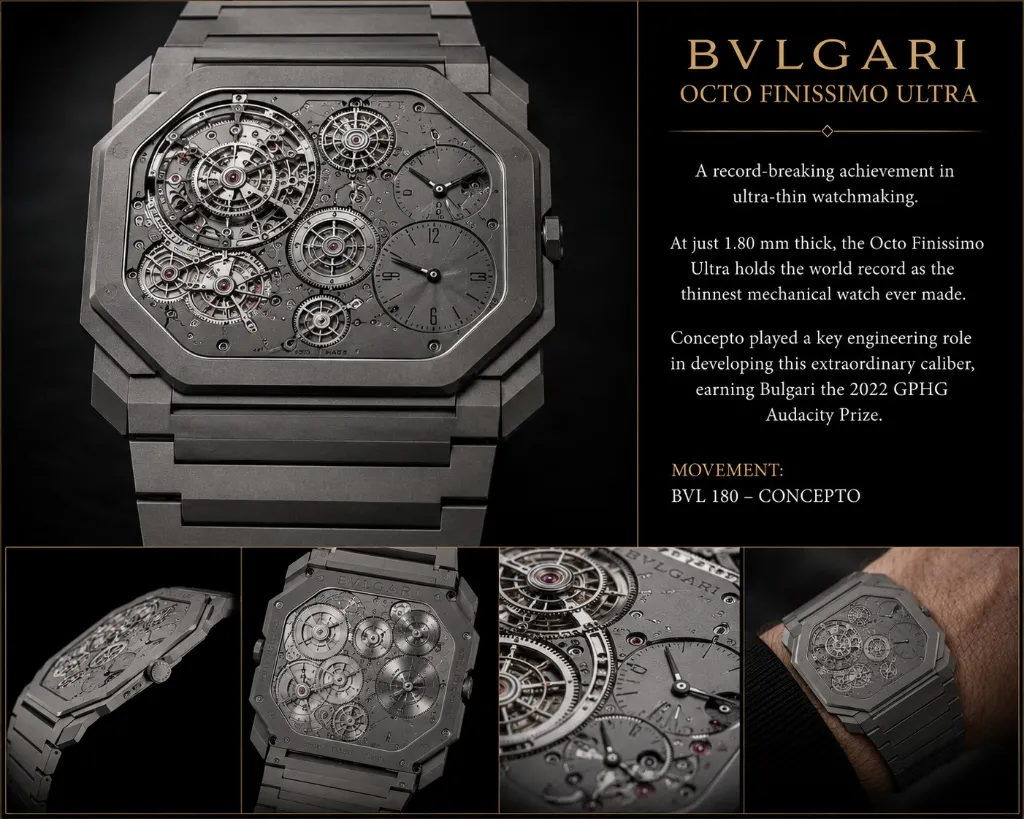
This is a completely different philosophy. Instead of adding complexity...
The challenge was removing everything that wasn't absolutely necessary. One of the thinnest mechanical watches ever created. Every fraction of a millimeter mattered, that's much easier to say than to actually engineer.
Concepto helped engineer one of the greatest achievements in modern ultra-thin watchmaking, contributing to a project that earned Bulgari the 2022 GPHG Audacity Prize.
That alone says a lot about the level they operate at
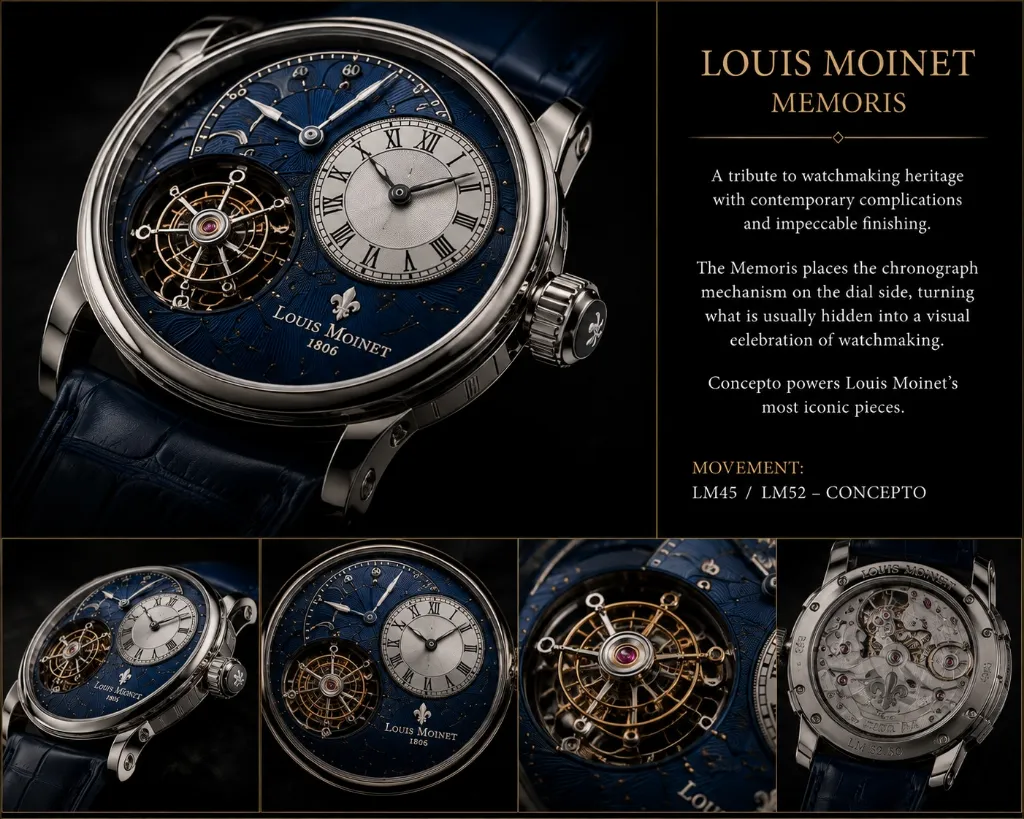
Most brands hide the chronograph underneath the dial. Louis Moinet decided to celebrate it. The entire chronograph mechanism sits proudly on the front of the watch, turning what is normally hidden into the centerpiece of the design. Mechanical engineering became visual art. Instead of hiding the movement... they made it the reason to buy the watch.
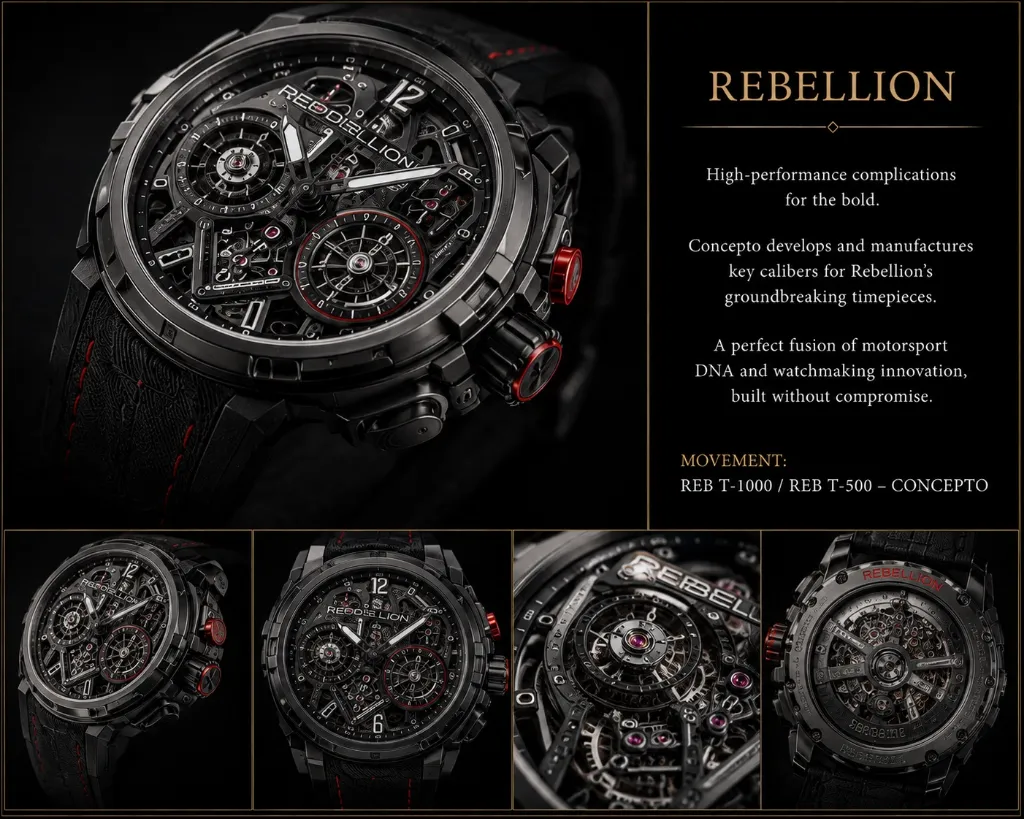
This one almost feels like Formula One engineering on the wrist.
It's the kind of watch that doesn't care whether you like it or not. But that's exactly why I love that it exists. It reminds us that watchmaking doesn't always have to look traditional.
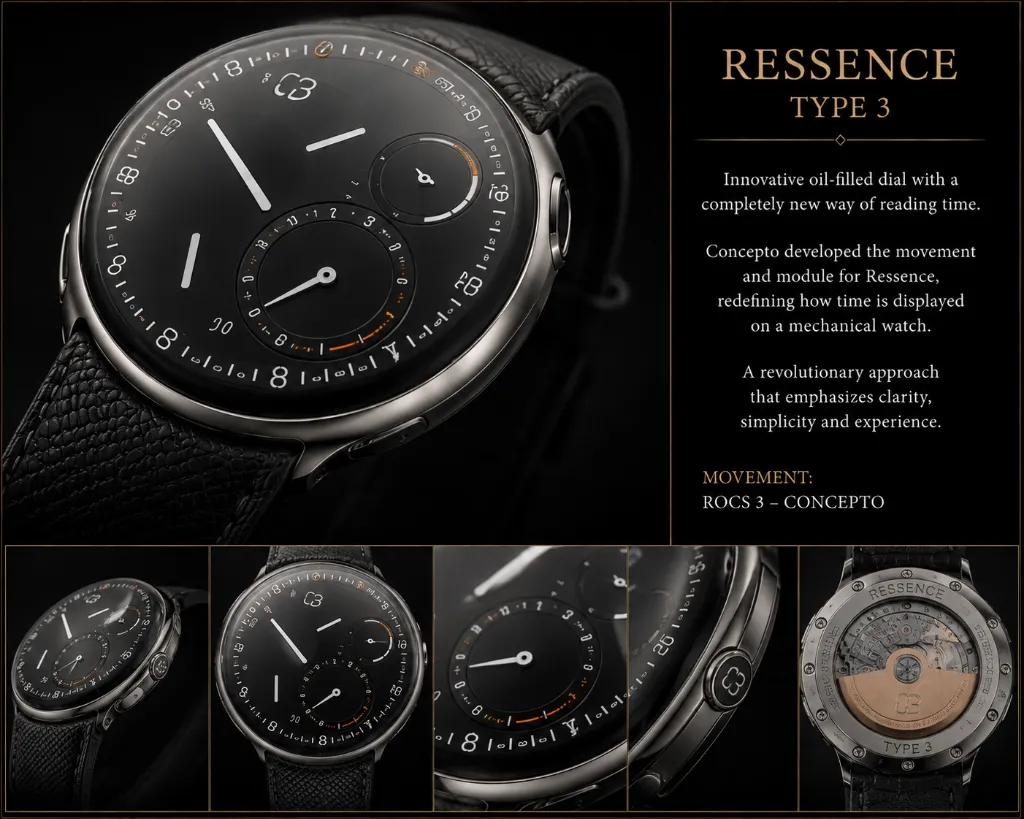
If you've ever handled a Ressence, you already know... It doesn't feel like any other mechanical watch. The oil-filled display. The floating indication. The completely different way of reading time. Concepto helped bring those ideas into reality.
Sometimes the greatest engineering isn't adding another complication...
It's making time easier to read in an entirely new way.
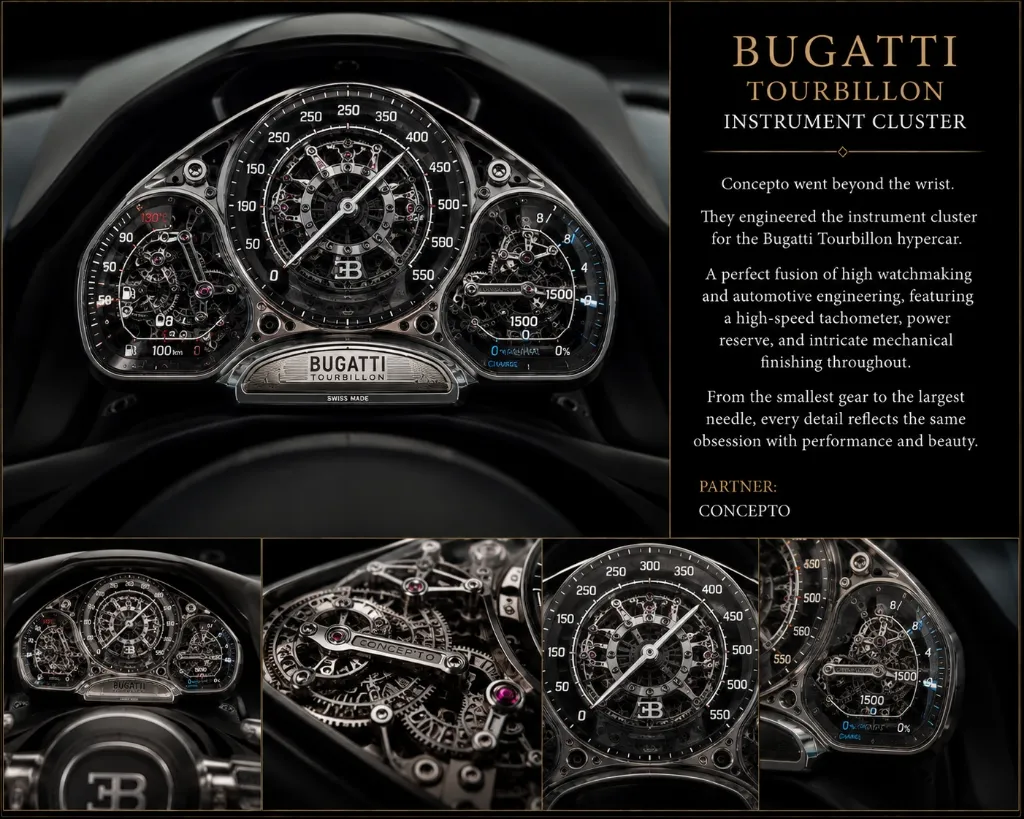
This one completely blew my mind. Concepto didn't stop at wristwatches. They helped engineer the instrument cluster for the new Bugatti Tourbillon hypercar. That means the same people capable of building minute repeaters and tourbillons are now solving engineering challenges inside one of the most advanced automobiles ever produced.
That's pretty remarkable.
FUN FACT: One of the things that impressed me most about Concepto is its versatility.
Unlike many specialist manufactures that become known for one signature complication, Concepto seems comfortable moving between completely different worlds. One day they're helping engineer an ultra-thin record holder for Bulgari.
The next they're building a rotating mechanical sculpture for Jacob & Co.
Then they're developing movements for independent brands like Louis Moinet or Ressence...
And now they're even contributing to the instrument cluster of a Bugatti hypercar.
To me, that speaks volumes about the depth of engineering talent inside the company.
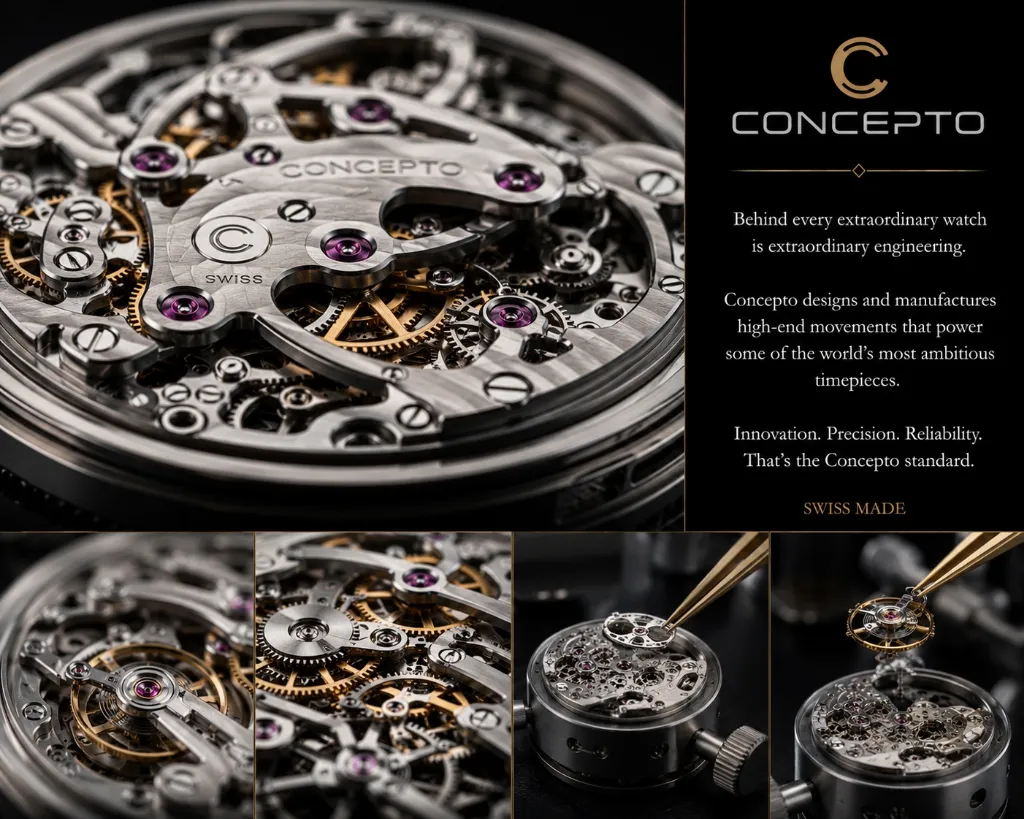
This is the question I kept coming back to.
Maybe... it's not about engineering.
Maybe... it's about recognition.
Agenhor gave collectors a legendary watchmaker.
Concepto quietly built a reputation around solving impossible mechanical problems... Often without anyone realizing they were behind them. And maybe that's why one company became part of the conversation...
...while the other became part of the movement.
The more I compared the two companies... The less I felt like I was comparing competitors.
I was looking at two completely different philosophies of watchmaking. One creates emotional complications that make us smile.
The other quietly solves mechanical problems that most of us never even realize exist. Neither approach is better. They're simply different. And honestly... I think modern watchmaking needs both.
The Agenhor Argument
"Agenhor became legendary because it had Jean-Marc Wiederrecht, a master watchmaker whose name became as important as the brands he collaborated with. The movements tell stories, evoke emotion, and collectors recognize the man behind the magic."
The Concepto Argument
"Concepto may actually be one of the most capable movement manufacturers in Switzerland today, quietly engineering some of the industry's most ambitious projects. Maybe history simply hasn't caught up with them yet."
The deeper I went into this rabbit hole...
The more I realized this discussion isn't really about Agenhor...
Or Concepto...
Maybe it's about us.
As collectors.
Maybe we've spent decades giving credit to the wrong names
Instead of asking...
Maybe we should start asking...
Twenty years from now... When collectors talk about the great independent movement manufacturers of our generation...
Will Concepto be mentioned alongside THA, Frédéric Piguet, Lemania, Chronode, Vaucher, and Agenhor?
Or...
Will it always remain the invisible engineer behind someone else's success?
I'd genuinely love to hear what everyone thinks.

Lorem ipsum dolor sit amet, consectetur adipiscing elit. Suspendisse varius enim in eros elementum tristique. Duis cursus, mi quis viverra.
Lorem ipsum dolor sit amet, consectetur adipiscing elit, sed do eiusmod tempor incididunt ut labore et dolore magna aliqua. Ut enim ad minim veniam, quis nostrud exercitation ullamco laboris nisi ut aliquip ex ea commodo consequat. Duis aute irure dolor in reprehenderit in voluptate velit esse cillum dolore eu fugiat nulla pariatur.
Block quote
Ordered list
Unordered list
Bold text
Emphasis
Superscript
Subscript
Lorem ipsum dolor sit amet, consectetur adipiscing elit. Suspendisse varius enim in eros elementum tristique. Duis cursus, mi quis viverra.
Lorem ipsum dolor sit amet, consectetur adipiscing elit, sed do eiusmod tempor incididunt ut labore et dolore magna aliqua. Ut enim ad minim veniam, quis nostrud exercitation ullamco laboris nisi ut aliquip ex ea commodo consequat. Duis aute irure dolor in reprehenderit in voluptate velit esse cillum dolore eu fugiat nulla pariatur.
Block quote
Ordered list
Unordered list
Bold text
Emphasis
Superscript
Subscript
.svg)
.svg)